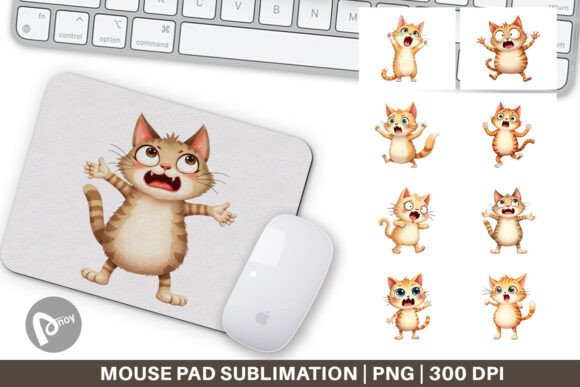
Mouse Pad Panic Cat: A Workflow-Driven Approach to Desk Personalization and Productivity
The tools we rely on daily often fade into the background of our routines, yet they shape our efficiency, comfort, and even our mindset. A mouse pad is a classic example: it sits under our hand for hours, but we rarely examine how it fits into our larger process of work. The Mouse Pad Panic Cat sublimation mouse pad challenges this passive acceptance. It represents a deliberate intersection of digital asset creation, manufacturing precision, and workspace psychology. For professionals, creators, and entrepreneurs who view their environment as a system to be optimized, this is not just a peripheral. It is a component of a broader workflow that spans from initial design planning to daily ergonomic execution. This article explores how a specific, attractive design delivered as a set of high-resolution PNG files integrates into practical task management, creative projects, and long-term workspace organization.
The Functional Shift: Reassessing Your Desk Tools
Most standard mouse pads are generic afterthoughts, often promotional items with poor edges and fading prints. Choosing a Mouse Pad Panic Cat involves a more intentional process. It begins with recognizing that your desk is a control center for complex workflows. Every item on it should serve a purpose, either functionally or psychologically.
From a systems thinking perspective, the mouse pad acts as an anchor zone. It defines the precise area for cursor control, separating active work from passive storage. During the planning phase of a new workspace setup, you assess factors like mouse sensor compatibility, wrist fatigue, and surface friction. The sublimation construction of this pad offers a consistent, durable texture that supports precise tracking across long work sessions. The vibrant Panic Cat design adds a layer of cognitive value. It can serve as a subtle stress release or a conversation starter during client video calls. By choosing a design that resonates with you, you are actively engineering your environment to support focus and identity.
The Digital Asset Workflow: From 8 PNG Files to Finished Sublimation Mouse Pad
Receiving 8 PNG files at 9.5 x 8.1 inches at 300 DPI is not simply receiving pictures. It is receiving a production-ready asset kit. Understanding how to move these files from your digital workspace to a physical desk tool is a mini-project in itself, involving preparation, execution, and quality control.
Preparing Your Files for Production
Before any printing occurs, the digital assets must be inspected and processed. The 300 DPI resolution ensures sharp edges and accurate color representation. Your first step in the workflow is to open these files in your preferred design software (Photoshop, Affinity, or a free tool like GIMP). Check the embedded color profile. Sublimation printing relies on specific ICC profiles to achieve accurate, vibrant colors. If the Panic Cat design has a dark background or neon accents, a quick soft-proof tells you how the final print will look. This planning phase prevents costly wasting sublimation blanks.
- Preparation Checklist: Confirm dimensions (9.5x8.1 inches), check resolution (300 DPI), verify color profile (sRGB or Adobe RGB as needed), and decide which of the 8 designs best fits your current workspace theme.
- Asset Organization: Store all 8 PNG files in a dedicated project folder. Label them by mood or usage intention (e.g., "panicking_during_deadlines.png", "creative_calm.png") to streamline future design rotations.
The Printing and Pressing Pipeline
Executing the transfer involves a clear sequence. First, you print the mirror image of the Panic Cat design onto high-release sublimation paper. The printer settings must match the paper and ink type. Once printed, the paper is carefully taped to the mouse pad blank using heat-resistant tape. This is where precision matters. The 9.5 x 8.1 inch size fits perfectly on standard blanks, but misalignment can cause ghosting or white edges. Using a heat press at the correct temperature (typically 390-400°F) and time (45-60 seconds) ensures the dye bonds correctly with the polyester coating. Rushing this step introduces quality control issues like faded colors or uneven coverage.
Quality Control During Implementation
After pressing, the paper is peeled away. Inspect the Mouse Pad Panic Cat for sharpness. Sublimation yields a permanent bond, so errors are costly. Check the edges for uncoated borders. Test the pad immediately with your mouse. A well-executed sublimation pad provides a smooth, low-friction surface that enhances sensor accuracy. If the design is intended for a gaming setup, confirm the colors match your keyboard and mouse lighting. This inspection is the final quality gate in your implementation process.
Using Your Mouse Pad Before, During, and After Intensive Work
The true value of an intentional workspace tool emerges when you integrate it into your daily routine. The Mouse Pad Panic Cat is not meant to sit idle; it supports specific phases of your task lifecycle.
Pre-Work Routine and Desk Preparation
Before a project session begins, your desk setup signals your brain to enter a focused state. Placing the Panic Cat pad onto your desk is a deliberate act of organization. Clear the workspace of clutter. Position the pad squarely in front of your keyboard. This physical arrangement creates a boundary for your mouse, preventing it from rolling off stacks of paper or onto uneven surfaces. For freelancers and remote workers, this preparation step is akin to laying out tools before a surgery. It reduces friction at the start of your day.
Active Task Support and Ergonomic Integration
During deep work—whether you are editing a timeline, coding a module, or analyzing a spreadsheet—the mouse is an extension of your hand. The Mouse Pad Panic Cat provides a stable, predictable tracking surface. This reduces micro-adjustments and hand fatigue over hours of use. The sublimation surface is also easy to clean. Spilled coffee or dust accumulation is wiped away without damaging the print. This maintains consistent performance across your entire workweek. The design itself can serve as a mental anchor during high-pressure tasks. A quick glance at the Panic Cat can normalize the stress of a deadline, reminding you that urgency is part of the creative process.
Post-Project Maintenance and Adaptation
After completing a major project, your workspace deserves maintenance. Cleaning the mouse pad with a mild soap solution restores its tactile properties. The durability of sublimation means the colors remain vibrant after repeated cleaning. If your workflow evolves—for example, you add a vertical mouse or a trackpad—the pad remains compatible. You can also use one of the remaining 7 PNG files to create a different design for a secondary workstation or a laptop desk. This reusability extends the lifecycle of your initial asset investment.
Integrating the Panic Cat Design into a Broader Style System
Professionals who value consistency often create a cohesive visual language for their office or studio. The Mouse Pad Panic Cat is a single element within a larger design ecosystem. The high-quality PNG files can be repurposed for other sublimation projects. You can create matching coasters, a desk mat, or even a phone case using the same Panic Cat artwork. This transforms your workspace from a random collection of objects into a curated environment.
- Theme Selection: Decide on a core aesthetic (minimalist, vibrant, humorous).
- Asset Deployment: Use the 8 PNGs to identify which design variation fits your core theme best.
- Physical Consistency: Ensure your mouse pad, mug, and notepad use the same or complementary design elements.
- Brand Extension: For entrepreneurs, this consistent style translates to a professional appearance during virtual meetings, enhancing personal brand recognition.
Long-Term Asset Management and Reusability
The digital files you receive are not one-time-use resources. They are part of your personal asset library. Storing the original 8 PNG files in a secure, backed-up location ensures you can replace or refresh your mouse pad years later. Sublimation blanks are inexpensive and widely available. If your current pad wears out due to heavy use, you can reproduce the exact same Panic Cat design without needing to contact a designer or search for the original file. This self-sufficiency is valuable for small business owners and creators who prefer managing their own supply chain. Additionally, the 300 DPI resolution allows for scaling or cropping if you decide to use the design on a different product format, such as a larger desk mat (provided you maintain aspect ratio).
Planning for long-term use also involves understanding the limitations of the material. Avoid exposing the pad to direct, prolonged sunlight, as UV rays can eventually degrade even sublimation dyes. Store unused blank pads flat to prevent curling. By treating your Mouse Pad Panic Cat as a durable, recirculatable asset, you maximize the return on your time and investment in the design.
Practical Observations for Daily Use
- Comfort: The smooth fabric surface reduces wrist drag. Consider pairing it with a gel wrist rest for extended coding or design sessions.
- Organization: Use the pad as a boundary. Keep your mouse on the pad, and place your phone and notepad outside it. This prevents the mouse from colliding with other objects.
- Efficiency: Test your mouse DPI settings on the new surface. You may find you need lower sensitivity on a consistent, high-quality pad, leading to more precise cursor control.
- Consistency: If you work from multiple locations, consider printing a second Panic Cat pad from your PNG files for your secondary desk. Familiar muscle memory reduces adaptation time.
Integrating the Mouse Pad Panic Cat into your routine is straightforward. It requires an initial investment in planning and production, but the result is a reliable, attractive tool that supports your workflow for years. By treating the mouse pad as a component of your broader systems—ergonomics, digital asset management, and workspace aesthetics—you move beyond passive consumption and into active environment design. The sublimation mouse pad becomes a small but significant lever for increasing comfort, maintaining consistency, and expressing the personality behind the professional.