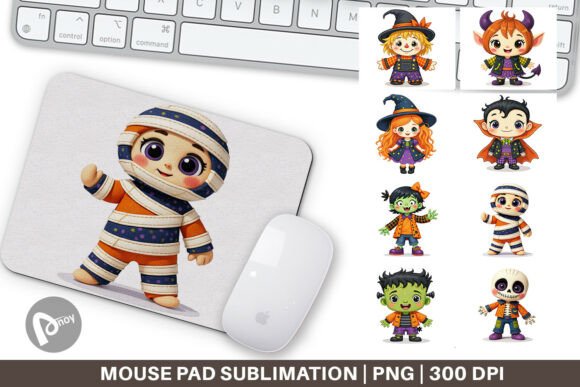
Mouse Pad Patchwork Halloween Friends: A Creative Way to Upgrade Your Desk Setup
If you have spent any time browsing custom desk accessories lately, you have likely come across the Mouse Pad Patchwork Halloween Friends design. At first glance, it looks like a playful seasonal addition to any workspace. But what many people miss is that this type of sublimation mouse pad offers far more than surface-level decoration. When chosen and used correctly, it can genuinely improve your comfort, workflow, and even the atmosphere of your desk area. The problem is that most people rush into buying or creating one without understanding a few critical details, and the result is often disappointing.
Let’s walk through the most common mistakes people make with designs like Mouse Pad Patchwork Halloween Friends, and more importantly, how to avoid them so you get the full benefit of a well-made sublimation mouse pad.
Assuming All Sublimation Mouse Pads Are the Same
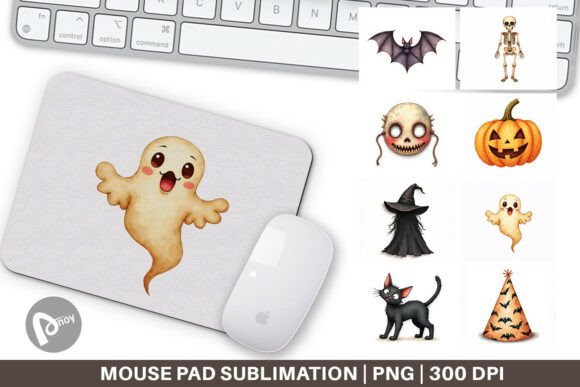
One of the biggest misunderstandings is that any sublimation mouse pad will produce the same quality result. The truth is that the base material, the coating, and the manufacturing process vary enormously between suppliers. A Mouse Pad Patchwork Halloween Friends design printed on a low-quality blank will look washed out, feel rough, and wear down quickly. You might see the vibrant patchwork of Halloween characters—ghosts, pumpkins, bats, and friendly monsters—but on a poor pad, the colors bleed, the edges blur, and the fabric pills within weeks.
Before you buy or produce one, check whether the mouse pad uses a high-density polyester surface designed specifically for sublimation. This makes a noticeable difference in how sharp the 300 DPI PNG file renders. If the material is too thin or has a low thread count, the ink will not bond properly, and your 9.5 x 8.1 inch design will look fuzzy.
What to look for instead
Look for suppliers who specify a sublimation-ready coating and a non-slip natural rubber base. A good quality pad holds the ink deep in the fibers, so the patchwork pattern stays bright even after months of use. If you are creating these yourself, invest in blanks from a reputable source rather than choosing the cheapest option.
Ignoring the Importance of File Preparation
You receive a PNG file at 9.5 x 8.1 inches at 300 DPI. That sounds ready to go, and many people assume they can print it directly onto transfer paper without any adjustments. This is where things go wrong. Sublimation requires a mirrored image, and if you forget to flip the design horizontally, all your text and directional elements will appear reversed. The patchwork details on the Halloween Friends design—like a witch flying left or a cat’s tail curling right—will look awkward when mirrored.
Another overlooked detail is color profile. Standard RGB images often print too dark or too dull on sublimation paper because the printer interprets colors differently. Without converting to a proper ICC profile for your specific printer and paper, the vibrant oranges, purples, and greens of the patchwork can turn muddy.
How to avoid this mistake
Always work in a dedicated design program like Photoshop or Affinity Photo. Load the correct ICC profile for your sublimation paper and printer. Mirror the image before printing. Test on a small piece of scrap material first if you are unsure. These few steps take five minutes but save you from wasting an entire mouse pad blank.
Underestimating Heat Press Variables
Sublimation is a science of temperature, pressure, and time. Many beginners assume they can use any heat press setting and get good results. With a Mouse Pad Patchwork Halloween Friends design, the risk is uneven heat distribution or too much pressure that crushes the mouse pad’s foam layer.
A typical mistake is pressing at too high a temperature to make the colors pop faster. This can scorch the polyester surface or cause ghosting, where the image appears double. Too little time, on the other hand, leaves the ink sitting on top of the fabric instead of bonding into it. The patchwork pattern then fades quickly after light use.
Better approach
Follow the manufacturer guidelines for your specific mouse pad blank. In most cases, 385 to 400 degrees Fahrenheit for 45 to 60 seconds with medium pressure works well. Use a heat tape to hold the paper in place so the design does not shift during pressing. Once pressed, let the pad cool completely before peeling the paper. This allows the ink to fully settle into the fibers.
Choosing Style Over Function
The Mouse Pad Patchwork Halloween Friends design is undeniably charming, with its collage of friendly spooky characters and warm autumn colors. But some people pick it solely for the aesthetic without considering how it performs as a daily tool. A mouse pad is not just a decoration. It directly affects how your mouse tracks, how your wrist feels, and how smoothly you work.
If the surface is too glossy or too textured, your mouse sensor may skip or drag. If the pad is too thin, your wrist will feel the hard desk underneath after an hour of use. If it is too thick, your mouse may sit at an awkward angle relative to your keyboard.
What to check before buying
Look at the thickness. A pad around 2 to 3 millimeters provides enough cushion without altering your mouse’s glide. Check the base: a natural rubber base grips the desk much better than synthetic alternatives. Run your hand over the surface. It should feel smooth but not slippery. The patchwork design should be printed cleanly with no rough texture from excess ink.
If you are buying a pre-made pad, read reviews that mention tracking performance, not just appearance. If you are making one, test the surface feel after pressing before you produce multiple units.
Overlooking Long-Term Care
A sublimate mouse pad is not indestructible. One common mistake is treating it like a standard printed mouse pad. People spill coffee on it, wipe it with harsh cleaners, or leave it in direct sunlight. The Mouse Pad Patchwork Halloween Friends design, while durable when properly made, will fade if exposed to UV light for extended periods. The polyester surface can also warp if washed in hot water or thrown in a dryer.
How to extend its life
Clean your mouse pad with a damp microfiber cloth and mild soap. Avoid alcohol-based cleaners. Let it air dry flat away from direct sunlight. If you rotate between a few desk setups, store the pad rolled up (not folded) to prevent creases. With these small habits, a quality sublimation mouse pad will stay vibrant for a year or more of daily use.
Misunderstanding the PNG File Purpose
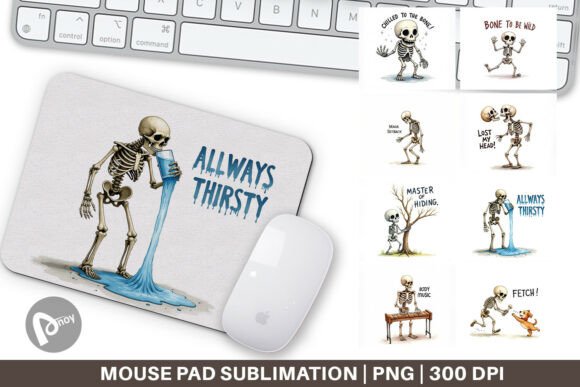
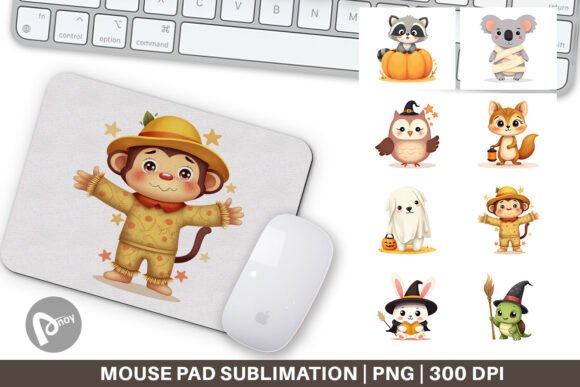
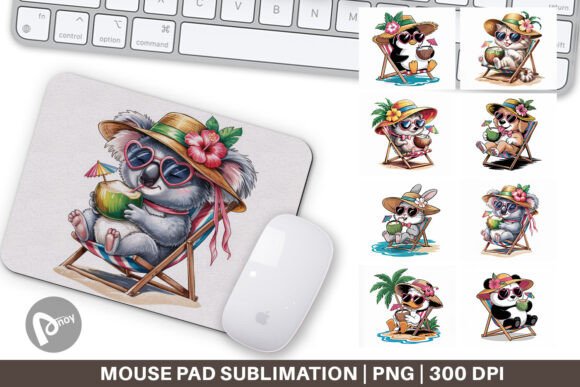
The product description mentions you receive 8 File PNG 9.5 x 8.1 inches 300 dpi. Some buyers think this means they can scale the image to any size without losing quality. That is not how PNG files work. At 300 DPI, the image is optimized for printing at the specified dimensions. If you try to enlarge it to fit a larger mouse pad, the pixels stretch and the patchwork becomes blurry. If you shrink it, you waste resolution.
Another misunderstanding is that the PNG is ready for direct printing onto fabric. It is not. The file is a design template meant for sublimation transfer. You still need to mirror it, load it into your print software, and use sublimation ink and paper. People who try to print it on a standard inkjet and then iron it onto a pad are almost always disappointed.
Practical advice
Use the PNG at its intended size. If you need a different dimension, recreate the patchwork pattern from vector elements instead of scaling the raster file. Save your final working file as a high-resolution TIFF or PSD before converting to a print-ready format. This preserves the detail of each Halloween character and keeps the patchwork edges crisp.
Rushing the Design Layout
Even if you are using a pre-made design like Mouse Pad Patchwork Halloween Friends, placement matters. Some users press the design slightly off-center or too close to one edge. On a 9.5 x 8.1 inch pad, even a quarter-inch shift is noticeable. The patchwork layout is meant to be centered, with space around it so your mouse moves freely without hitting the printed edge.
If you are combining multiple patchwork elements yourself, another mistake is overcrowding. Too many small details in a confined area make the pad look cluttered and reduce the visual impact of each character. Your mouse also needs a smooth area to glide. A busy design that extends to the edges leaves no neutral zone for mouse movement.
A better layout strategy
Center the main patchwork cluster so there is a clear border of unprinted fabric around it. This creates a frame that focuses attention on the Halloween friends while giving your mouse room to operate. If you are designing your own version, keep the elements spaced so each character is recognizable at a glance. Less is often more when the design needs to coexist with your daily work.
Assuming One Size Fits All Workflows
A 9.5 x 8.1 inch pad is a medium size, suitable for most standard mice and moderate mouse movement. But if you are a gamer with a low sensitivity setting, or if you work with two monitors and a wide mouse sweep, this pad may be too small. You will constantly bump into the keyboard or the edge of the desk, which defeats the productivity benefit.
Conversely, if you work in a compact space like a coffee shop or a small home desk, a large pad can overwhelm your setup. The Mouse Pad Patchwork Halloween Friends design shines as a statement piece, but it needs proportion to your actual workspace.
What to do
Measure your desk and your typical mouse movement range before committing. If you need a larger area, look for extended versions of the same design or create a custom sublimation pad at a larger size. If you stick with the 9.5 x 8.1 inch format, position your keyboard close to the pad so your mouse stays within the smooth surface area.
Forgetting the Emotional and Practical Value
Finally, a subtle mistake that many people make is treating a themed mouse pad as purely functional or purely decorative. The Mouse Pad Patchwork Halloween Friends design does both jobs when chosen thoughtfully. The patchwork style, with its layered autumn colors and friendly characters, can genuinely lift your mood during a long work session. Seasonal desk accessories help mark the passing of time and make a home office feel more personal.
At the same time, a well-constructed sublimation pad improves your wrist posture and mouse accuracy. You are not sacrificing comfort for aesthetics. The two work together when you pay attention to material, print quality, and size. If you buy cheap or rush the process, you lose both benefits. If you take the time to select a quality blank, prepare the file properly, and press with care, you get a pad that makes your desk look inviting and your work feel smoother.
Final Practical Checks Before You Buy or Create
- Verify the pad thickness and base material. Natural rubber grips best.
- Confirm the sublimation coating is suited for polyester fabric surfaces.
- Test the file at 300 DPI for sharpness. Do not enlarge beyond 9.5 x 8.1 inches.
- Mirror the image before printing. Double-check directional elements like text or character poses.
- Use a calibrated heat press with consistent temperature and pressure.
- Let the pad cool fully after pressing before peeling the transfer paper.
- Clean gently with a damp cloth and mild soap. Avoid sunlight and heat exposure.
- Choose a size that matches your desk space and mouse movement range.
By avoiding these common pitfalls, you will get a Mouse Pad Patchwork Halloween Friends that not only looks great on your desk but also supports your comfort and productivity day after day. The difference between a disappointing purchase and a genuinely useful accessory often comes down to the small details that most people overlook. Now you know exactly what to check and how to get it right.